INDUSTRIAL AUTOMATION APPLICATIONS · INJECTION MOLDING
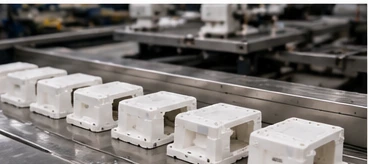
Custom injection molded sensor housings and enclosures for industrial automation, monitoring equipment, control systems, and connected devices, with engineering review from CAD and DFM through tooling, inspection, and production.
Built around your interface requirements: Sensor housings are more than cosmetic plastic parts. Mounting points, connector fit, sealing interfaces, clips, inserts, wall thickness, assembly direction, and dimensional stability should be reviewed before mold tooling begins.
Injection Molded Sensor Housings for Industrial Automation
Daremotion supports custom plastic sensor housings and enclosures for industrial automation, monitoring equipment, control systems, and connected devices. We review the housing design, material, sealing requirements, assembly method, and production volume together.
Typical Applications
- Industrial proximity and photoelectric sensor housings
- Control and monitoring device enclosures
- Connector covers and protective plastic shells
- Custom housings for factory automation equipment
Materials and Performance Requirements
Material selection depends on temperature, chemical exposure, impact, electrical requirements, appearance, and operating environment. Common engineering plastics may include ABS, PC, PA, and PBT, with filled grades considered when stiffness, strength, or dimensional stability is important.
Key Mold Design Considerations
- Wall thickness and draft for stable molding and reliable ejection
- Screw bosses, snap fits, inserts, and other assembly features
- Gasket grooves or sealing interfaces where protection is required
- Parting lines, weld lines, sink marks, and cosmetic surfaces
- Dimensional control around sensors, connectors, and mounting points
Manufacturing and Quality Control
The process can include DFM review, mold design, toolmaking, trial molding, dimensional inspection, and production molding. Inspection plans should focus on critical mounting, sealing, connector, and sensor-location dimensions.
What to Include in Your RFQ
For a practical quotation, provide 3D CAD files or drawings, material requirements, estimated quantity, annual volume, surface finish, critical tolerances, operating environment, target delivery date, and destination. If the design is confidential, let us know if you prefer to share files after an NDA.
Request a Manufacturing Quote
Send your sensor housing or industrial enclosure requirements to Daremotion for an engineering review and quotation.
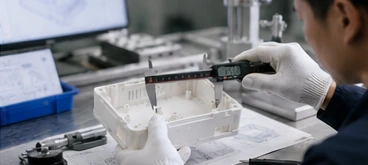
Quality and Dimensional Control
Inspection should focus on sensor location, connector fit, mounting points, sealing interfaces, and datum structure. Share these requirements before sampling so the inspection plan reflects how the enclosure functions.
Have a Sensor Housing to Review?
Send your CAD file, drawing, material target, program volume, and timing through the Request a Manufacturing Quote page.
FAQs
Can you make custom sensor housings from our CAD files?
Yes. Share the CAD model, drawings, material target, assembly context, and production volume for an initial engineering review.
Which material should be used for a sensor housing?
It depends on temperature, chemicals, impact, electrical needs, appearance, sealing, and dimensional stability. The application requirements should be reviewed before choosing a grade.
Can you support prototype and production quantities?
Yes. Prototype, low-volume, and repeat-production requirements can be evaluated with the tooling and material plan.