RFQ Guide | Injection Molding
Custom Injection Molded LED Light Housings: What to Include in an RFQ
A practical sourcing checklist for lighting engineers and procurement teams comparing custom plastic housing suppliers.
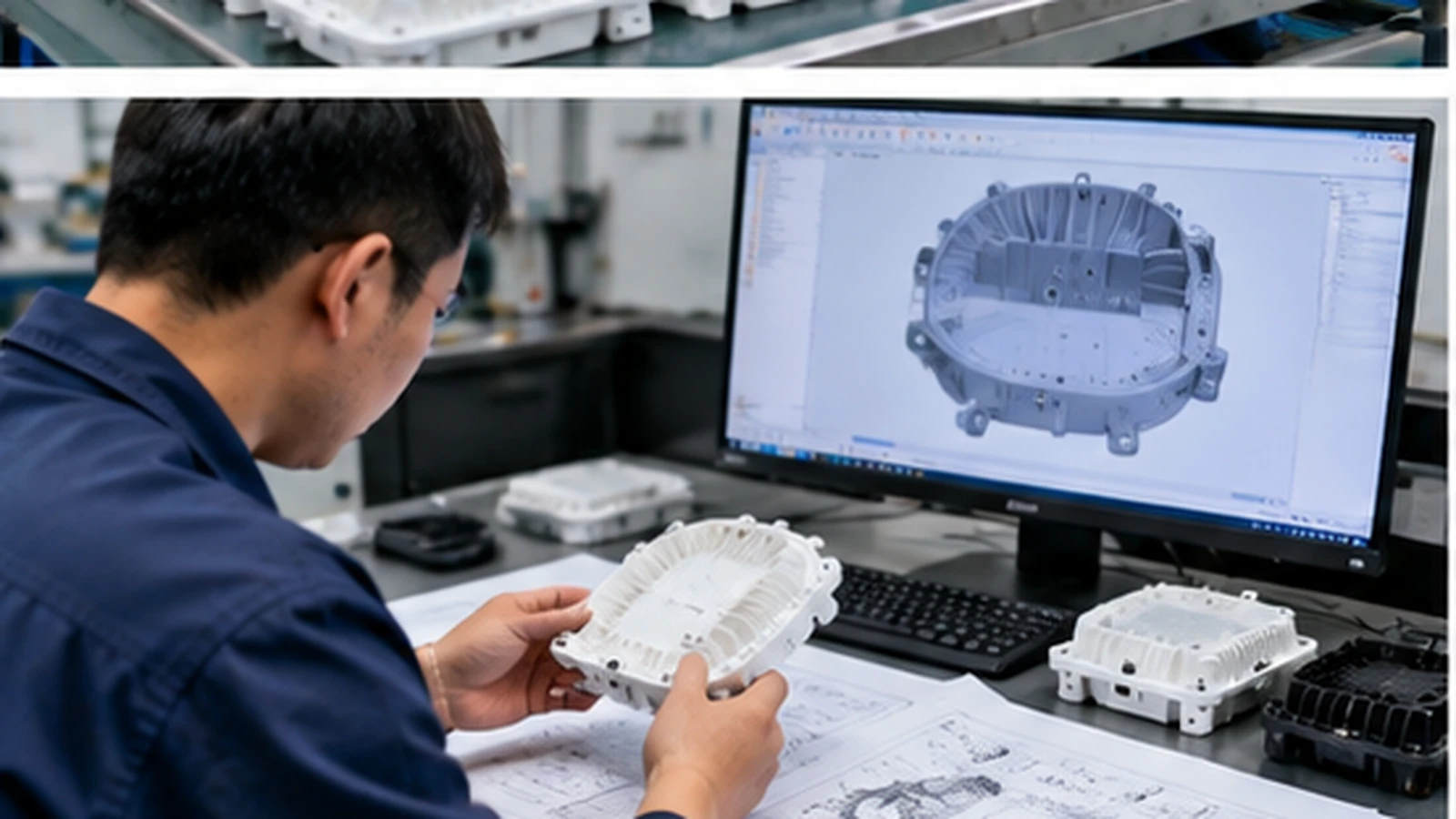
When a buyer searches for an injection molded LED housing RFQ, the real question is rarely only “What is the unit price?” The supplier also needs enough information to evaluate part geometry, tooling risk, material behavior, inspection requirements, production volume, and delivery terms. A complete RFQ helps both sides identify risks before a mold is built.
1. Start with the part definition and intended use
Explain where the LED housing will be installed and what it must protect. A compact indoor indicator light, an outdoor luminaire, and an automotive lighting enclosure may need very different resin grades, sealing features, heat resistance, optical surfaces, and cosmetic standards.
- Part name, revision, and intended application
- Estimated prototype, pilot, and production quantities
- Operating temperature, UV exposure, moisture, chemical contact, and load conditions
- Critical interfaces such as lens fit, PCB clearance, fasteners, clips, and cable exits
For broader design review, link the request to this injection molding DFM checklist before asking suppliers for final tooling prices.
2. Include CAD, drawings, and the revision that should be quoted
Attach a native or neutral 3D file such as STEP, plus a 2D drawing when dimensions, datums, inspection points, or cosmetic boundaries matter. State which file controls if the model and drawing do not match. This prevents a supplier from pricing different assumptions than the engineering team intended.
What the drawing should identify
- Critical dimensions and functional tolerances
- Parting lines, gate restrictions, ejector witness limits, and no-touch cosmetic areas
- Flatness, fit, snap-fit, sealing, and light-leak requirements
- Texture, gloss, color reference, logo or marking requirements
Do not apply tight tolerances to every feature by default. Ask the supplier to flag dimensions that may require special tooling, secondary operations, or a design adjustment. Our guide to injection molding tolerances for an RFQ gives a useful starting framework.
3. Specify the material by performance, not only by a trade name
LED housings commonly need a balance of impact strength, heat resistance, dimensional stability, appearance, and processability. PC, ABS, PC/ABS, flame-retardant grades, and other engineering resins can behave differently during filling, cooling, and finishing. If the application has a safety or regulatory requirement, identify the exact grade or approval requirement that must be verified.
At minimum, include:
- Preferred resin family and approved alternatives
- Color, gloss, texture, and appearance sample expectations
- Heat, UV, flame, chemical, or weathering requirements
- Whether regrind is allowed and what traceability is required
Use the custom plastic enclosure materials guide to compare the questions that should be answered before material approval.
4. Ask for a DFM review before approving mold tooling
A useful DFM review should not be a generic statement that the part is manufacturable. Ask the supplier to comment on draft, wall thickness transitions, ribs and bosses, shutoffs, weld-line locations, gate strategy, ejection, venting, cooling, and likely cosmetic risks.
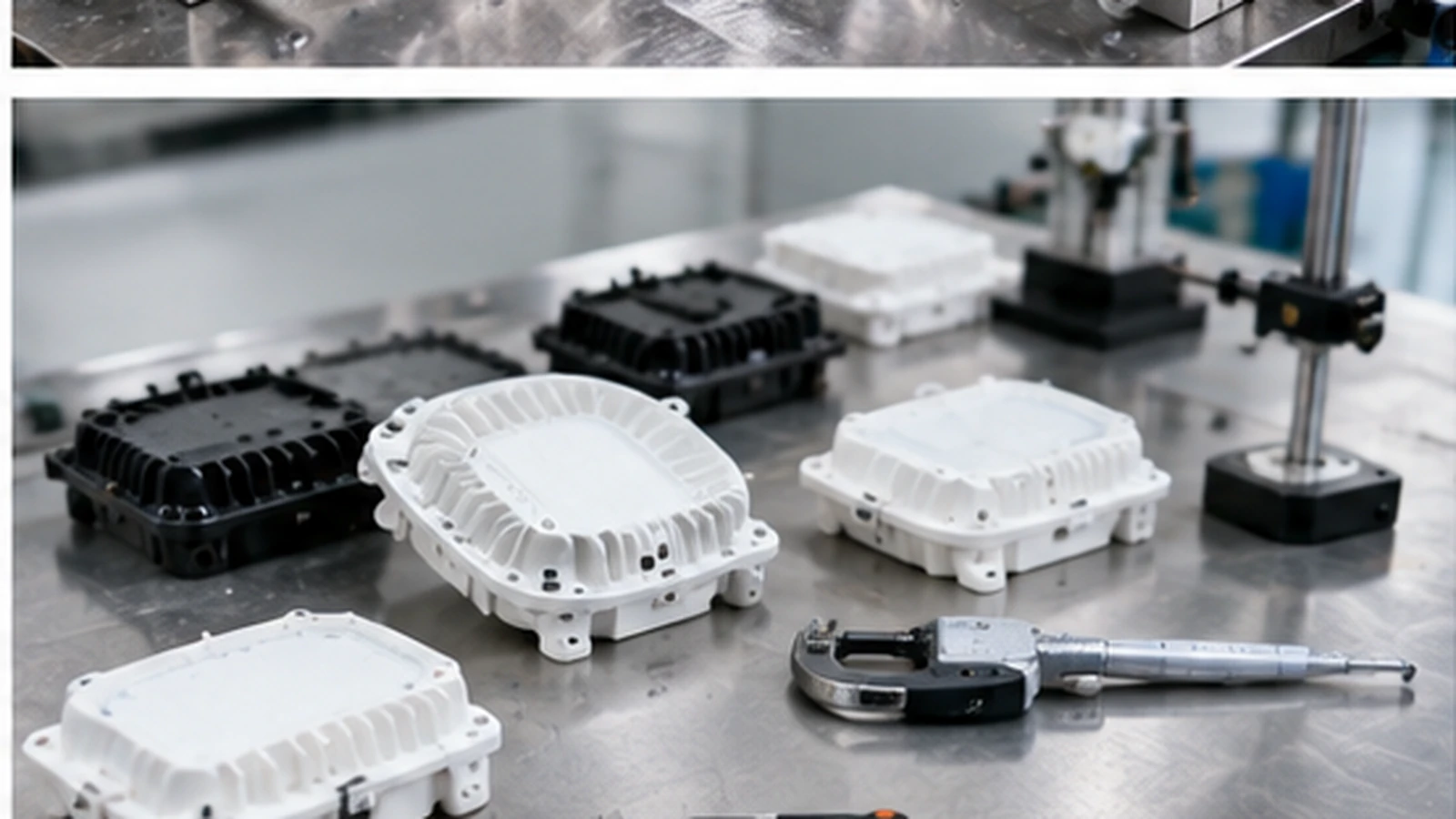
For more detail on schedule risk, review how DFM can reduce injection molding lead time. The goal is not to remove every design decision, but to make each tradeoff visible before steel is cut.
5. Define mold tooling, sampling, and change control
Your RFQ should state whether the quotation covers mold design, mold manufacturing, first-off samples, dimensional reporting, texture or surface treatment, and revisions after sampling. Clarify who owns the mold, how design changes are approved, and what maintenance records are provided.
Ask for a tooling plan that explains the proposed steel or mold construction, cavity arrangement, expected maintenance approach, spare wear components, and the process for addressing a molding issue found during a trial. A supplier’s mold tooling capability page should make these responsibilities easy to understand.
6. Put quality and acceptance criteria in writing
Quality expectations are easier to manage when they are connected to a drawing, sample, or measurable inspection method. Tell the supplier which characteristics are critical to function and which are cosmetic preferences.
- Incoming material identification and lot traceability
- First article or first-off dimensional inspection
- In-process checks for flash, short shots, sink, weld lines, warpage, and color consistency
- Final inspection, packaging inspection, and photo or report requirements
- Nonconformance handling, containment, and corrective-action communication
Review the supplier’s equipment and quality controls page, then ask which checks are included in the quoted scope and which are optional.
7. Confirm volume, lead time, packaging, and shipping assumptions
State the expected order pattern, not just a single annual number. Monthly releases, a small pilot, forecast flexibility, and a ramp-up schedule can change the recommended tooling and production plan. Ask for a milestone-based lead-time estimate covering DFM, tool design, mold build, sampling, approval, and production.
Also clarify carton dimensions, protective packaging, labeling, palletization, export documents, and the delivery term you prefer. Daremotion can coordinate packaging and international freight through logistics partners; freight cost and the selected Incoterm should be confirmed in the quotation. If DDP is requested, ask for a separate landed-cost line so the commercial comparison remains clear.
RFQ checklist for a faster supplier comparison
| RFQ item | What to provide or ask |
|---|---|
| Part data | Revision-controlled STEP, 2D drawing, quantity, and application conditions |
| Material | Resin family or exact grade, color, finish, and required performance |
| Tooling | Mold scope, ownership, sampling plan, maintenance, and change control |
| Quality | Critical dimensions, cosmetic limits, inspection reports, and corrective-action process |
| Commercials | Tooling cost, piece price, MOQ or low-volume options, milestones, packaging, and Incoterm |
Frequently asked questions
Can I request a quote before the design is final?
Yes. Mark the file as preliminary and identify the open decisions. The supplier can provide a budgetary view and a DFM risk list, but the final tool and piece price should be confirmed after the released design is reviewed.
Can a supplier sign an NDA before receiving CAD files?
Yes. If the design is confidential, request an NDA before sharing files and note any handling or access restrictions in the RFQ. Daremotion can arrange NDA signing before quotation review.
Is low-volume production possible?
Small-batch and pilot requirements can be discussed. The right approach depends on part complexity, tool design, material, and the expected path to production, so include the initial quantity and forecast rather than assuming a fixed MOQ.
Need an RFQ review for an LED housing?
Send your CAD files, drawing, material preference, volume, and target timing. We can review manufacturability, tooling scope, inspection needs, packaging, and shipping assumptions before preparing a quotation.