Injection Molding Design Guide
Industrial control panel housings must protect electronics while remaining practical to mold, assemble, inspect, and service. A good injection molded enclosure design balances wall thickness, draft, ribs, bosses, connector openings, material performance, and the production volume expected by procurement.
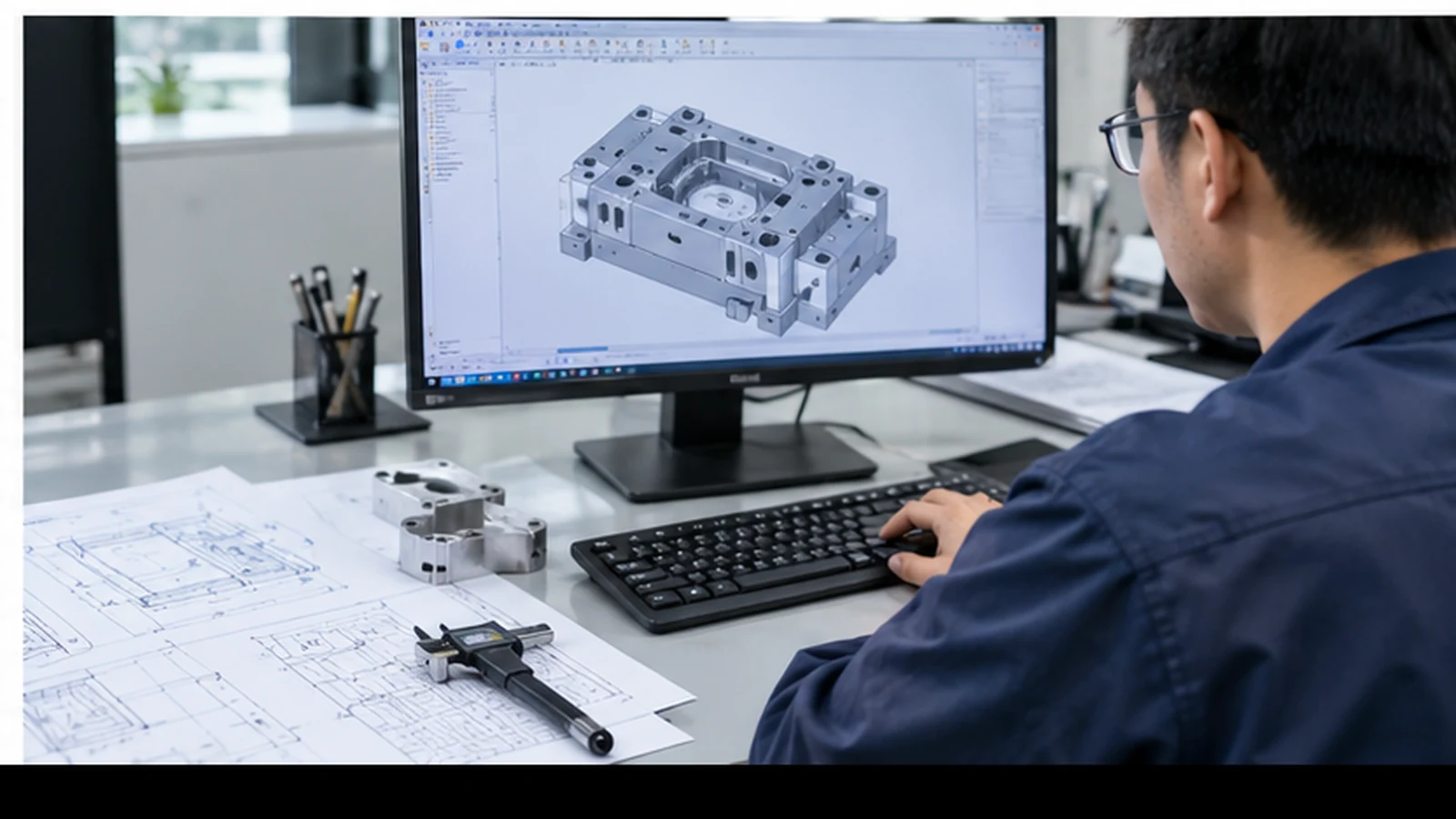
For a project-specific review, see our custom plastic housings for industrial control panels or custom injection molding services.
Start With the Complete Assembly
Before changing the enclosure geometry, define the PCB, terminal blocks, display, cable glands, fasteners, seals, and service access. The enclosure should be designed around the interfaces that cannot move. Mark mounting datums and identify which dimensions control fit, sealing, connector alignment, and electrical clearance.
Injection Molded Housing DFM Checklist
Keep wall thickness as uniform as practical
Large changes in section thickness can create uneven cooling, sink marks, warpage, and inconsistent appearance. Use ribs or a cored-out structure where stiffness is needed instead of making the entire wall excessively thick.
Add draft to molded surfaces
Draft helps the part release from the mold without scuffing or excessive ejection force. The required amount depends on texture, depth, steel condition, and the location of cosmetic surfaces. Confirm draft before the parting line and ejection system are finalized.
Design ribs and bosses for molding
Ribs should support stiffness without creating heavy intersections. Screw bosses need suitable wall support, core-outs, and clearance for the selected fastener. If heat-set inserts or threaded inserts are required, include their installation method in the RFQ.
Plan the parting line and ejection direction
Connector openings, undercuts, snap-fits, and side access may require slides, lifters, or a revised parting line. A clear ejection direction can reduce tooling cost and improve long-term mold maintenance.
Material Selection for Control Housings
ABS is often considered for general-purpose housings; PC can provide higher impact performance; PC/ABS can balance appearance, toughness, and processing; PA may suit demanding mechanical environments. Flame-retardant grades may be needed for certain electrical applications, but the exact grade should be selected against the required test standard and operating conditions.
Consider heat, impact, chemicals, UV exposure, surface texture, color, electrical performance, and expected service life. Material changes can affect shrinkage, tooling assumptions, tolerances, and cosmetic results.
Tolerances, Sealing, and Cosmetic Zones
Do not apply one tight tolerance to every enclosure feature. Identify critical mounting holes, connector interfaces, gasket lands, latch locations, and PCB datums separately from non-critical external surfaces. Define cosmetic zones for texture, gloss, color, flash, sink, and weld-line expectations.
For production planning, our injection mold tooling services can review cavity layout, steel selection, cooling, ejection, and sample iterations.
Prototype, Tooling, and Production Readiness
A practical workflow is design review, DFM feedback, quotation, tool design, mold manufacturing, first trial, sample inspection, design approval, and production release. Low-volume validation can expose assembly or fit issues before a larger order is placed.
Share the 3D CAD model, 2D drawing, annual volume, initial quantity, target material, surface finish, and delivery destination when requesting a quote. This produces a more useful manufacturing response than a part file alone.
Frequently Asked Questions
What wall thickness should an injection molded enclosure use?
The correct value depends on the material, part size, stiffness, appearance, and molding process. A consistent nominal section is usually a better starting point than selecting a single number without reviewing the full geometry.
Do control panel housings need draft?
Yes, molded surfaces generally need draft for reliable release. Texture, depth, and ejection direction determine the practical draft requirement.
Can you review CAD files before an injection molding quote?
Yes. DFM review can identify molding risks, tooling implications, material concerns, and critical assembly dimensions before the quote is finalized.
Send Your Housing Design for Review
Send your CAD files, drawing, material target, volume, and delivery requirements to the manufacturing quote team for a focused DFM and tooling review.